

Hotel booking software, also known as hotel reservation software, is any technology that enables hoteliers to accept direct bookings through their website and other direct distribution channels. It is an external interface where guests schedule their stay, choose rooms, and make payments, without contacting the hotel directly. Behind the scenes it manages rates, availability, and guest reservations, passing this information from the hotel to the guest and vice versa.
Hotel booking software is important because it boosts efficiency and accessibility. Your booking software streamlines the reservation process, allowing guests to book rooms anytime without staff oversight. It cuts out middlemen, ensuring the best rates for guests and higher hotel revenue.
It also prevents overbooking and keeps everything in sync, allowing guests to tailor their stay preferences and enhance their experience.
Whether a boutique bed and breakfast or a 500+ room resort, every hotel benefits from easy-to-use booking software. Properties still relying on phone or form bookings are losing revenue, especially amongst younger travelers who are less likely to reach out directly to the hotel.

Jump to Section
What is hotel booking software?
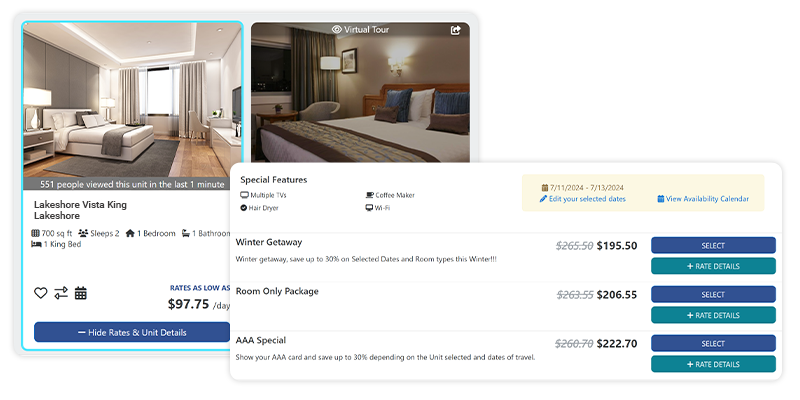
Hotel booking software is a suite of tools that streamline the booking process for hotels. They take online reservations by letting guests conveniently book directly from their website or other direct channels. This online interface displays room availability, types, and rates in real time through a two-way integration with the hotel’s property management system. The booking software also handles the payment process, by providing a secure payment page where guests can pre-pay part or all of their reservation.
How does hotel booking software work?
Hotel booking software is the bridge between a guest’s desire to stay at your hotel and their ability to book that stay. Your hotel booking engine is the web-based interface they interact with to do so.
When a potential guest visits your website, they should be directed to the booking engine when they click BOOK on the links strategically placed throughout your site. The guest provides their dates of stay and the booking engine then surfaces rooms and rates available on the dates selected. This information is sourced directly from the hotel’s property management system. If the hotel is using a revenue management platform, the specific rates are managed and optimized in either that system or in the PMS itself. A secure, seamless connection ensures that this data is shared in real time, preventing overbooking and cancellations.
Once the guest books directly, their stay details, including up-sells promoted by the booking engine are sent back to the PMS. The information, including payment details, is stored until the day comes when the guest arrives, and it is needed.
A robust, seamless booking engine is necessary to ensure that this entire process, syncing data, showing rates, and so on, happens near instantaneously for the guest. Slow or confusing booking engines will lose bookings.
Why do hotels need booking software?
Now that we understand what hotel booking software does, we can also unpack what makes it so important to hotel revenue and operations.
Increased direct bookings
A well-implemented booking engine increases the likelihood a guest will book directly with you. This decreases your overall number of third-party bookings and your reliance on OTAs to drive occupancy. Decrease the high commission bookings from OTAs and increase direct bookings, which come at a lower cost to you.
Enhanced guest experiences
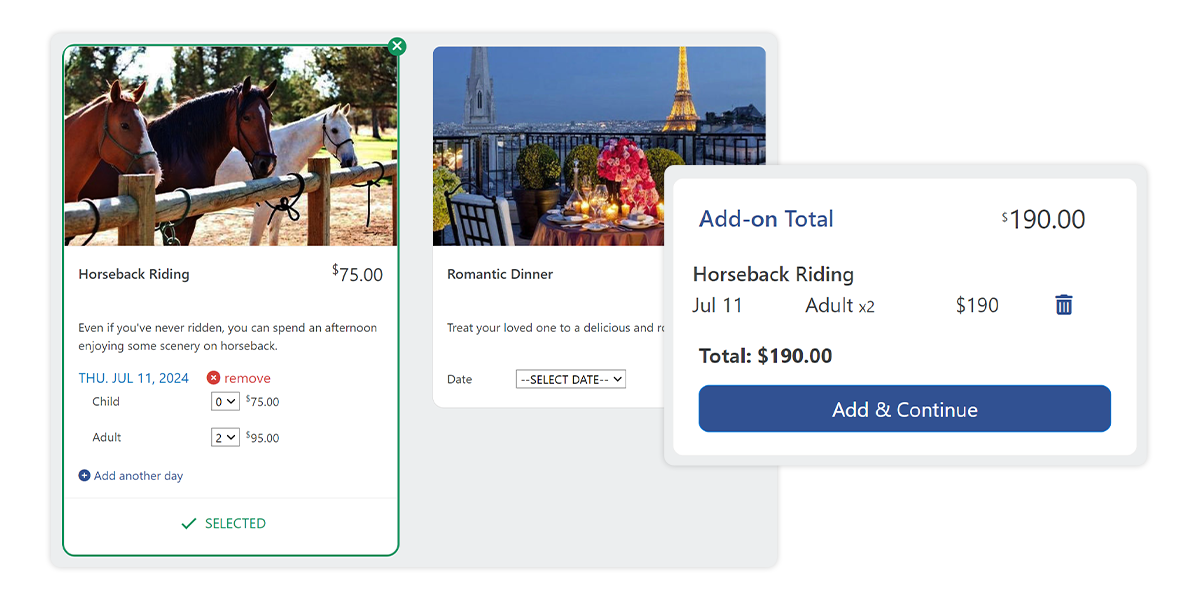
An online booking engine is a convenient way to book 24/7, while promoting relevant upsells and promotional offerings. Most guests prefer the convenience and speed of making a reservation via a booking engine, compared to a form or needing to call into the hotel.
Data-driven decision making
Gain insight into booking trends to better understand your guests and booking trends. Understand what time of day, week, or month guests typically book, as well as how far in advance guests’ book. This allows you to optimize rates and sell relevant deals to boost revenue and occupancy.
Competitive advantage
Guests now assume they should be able to easily book online. Stay ahead of hotels with outdated software while also keeping up with guest expectations. A fast, easy-to-use booking engine can put you ahead of price-conscious guests who are comparing rates and trying to understand the options available to them.

Why are direct bookings important to a hotel?
Direct bookings are reservations made directly with the hotel, with no intermediary such as a traditional travel agent or a travel website. While direct bookings used to be made via phone or walk-ins, these days most hotels rely on their website as their primary direct booking channel.
Most hotels want to increase their direct bookings. If you’re looking to increase your direct revenue, here are 10 Hotel Direct Booking Strategies that Work. This method of booking is important to hotels for many reasons, including:
Cost Savings
Reservations made through online travel agencies come with high commission fees, often 15 to 30% of the total booking value. Direct bookings, depending on your booking engine, have a much lower cost.
Ownership of Guest Data
In this day and age, guest data is a valuable commodity. Third-party bookings won’t provide all the details, because in their mind, if a guest booked through their site, that is their new user as much as your guest. And they’ll be marketing to that user in the future – possibly even competing hotels!
On the other hand, when a guest makes a reservation on your booking engine, you can collect valuable guest information (email addresses, preferences, history) for use in your own marketing campaigns in the future.
Building Guest Relationships
When you own your guest data, you can start building a long-term relationship with your guests. Encourage loyal guests with relevant discount codes they can use in the booking engine, available exclusively for repeat visits.
Increased Revenue
Use exclusive packages, promotions, and price incentives to boost RevPAG (revenue per available guest). When implemented correctly in your hotel booking software, these add-ons feel intuitive and relevant, rather than pushy or unnecessary.
Control Over Brand Experience
Create a consistent brand experience everywhere on the web, so guests know when they’re on your sites and not a third-party or unaffiliated website. Your booking engine should match your website as well as your branding on property, and ideally remain on the same URL as your hotel website.
Loyalty Programs
Once you’ve built a base of loyal guests, you can create a loyalty program in which they collect points or receive special discounts, all bookable exclusively through your website.
Flexibility and Customization
Direct bookings give you flexibility you do not have with third-party sites, that may create their own packages and offers. This can hurt your bottom line and make that guest more loyal to the third-party than to your own site. However, with direct bookings you can create your own special offers and packages.
Reduced Dependency on OTAs
Create a more balanced distribution strategy. Overly relying on OTAs means that you’re paying costly commission fees and losing guest data – see above for more on why that’s harmful to your hotel’s success! OTAs can be a great way to get a first booking, but you want their second booking to be directly with you.
Better Insights
Make data-driven decisions when you understand booking patterns, guest preferences, and market trends. These insights can help you understand booking trends at your hotel, so you can create a strategy to drive more revenue. For example, if most guests are booking last minute – encourage booking in advance with competitive rates!

Hotel booking software must-have features
If you’re researching a booking engine software for your hotel, here are nine of the essential features that are an absolute must:
Frequently asked questions about hotel booking software
What exactly is hotel booking software, and how is it different from a PMS or channel manager?
Hotel booking software is the guest-facing technology that enables direct online reservations. A PMS manages hotel operations and inventory, while a channel manager distributes rates and availability across third-party channels.
Is hotel booking software worth it for independent or boutique hotels?
Yes. A booking engine gives independent hotels a direct ecommerce channel that can help convert more website visitors, reduce OTA reliance, and build direct guest relationships.
How much revenue do direct bookings typically save compared to OTAs?
OTA commissions are often 15% to 30% of booking value, while direct bookings generally have lower distribution costs. Actual savings vary based on the hotel’s technology, payment processing, marketing costs, and OTA agreements.
What booking software features actually impact conversions?
The biggest conversion drivers are a mobile-first experience, simple navigation, real-time rates and availability, seamless website integration, clear room information, secure booking, and tools such as rate comparisons, special offers, and urgency messaging.
How does booking software help hotels own guest data and build loyalty?
Direct booking software allows hotels to collect guest information, subject to applicable privacy requirements and consent, and use it to support personalized marketing, repeat bookings, and loyalty efforts.
Can hotel booking software display packages and special rates?
Yes. Booking engines can display special rates, packages, promotions, and other offers designed to give travelers additional reasons to book directly.
Can hotel booking software support upselling?
Yes. A booking engine can promote relevant room upgrades, packages, amenities, meals, and other add-ons during the reservation process, creating additional revenue opportunities.
Can hotel booking software integrate with a PMS?
Yes. A two-way PMS integration allows the booking engine to access real-time rates and availability and send completed reservations back to the hotel’s system.
Does hotel booking software need to be mobile-friendly?
Absolutely. A mobile-first booking experience makes it easier for travelers to shop and reserve rooms on smartphones and reduces friction during the path to purchase.
Can hotel booking software help reduce OTA dependence?
Yes. A conversion-focused booking engine gives travelers an easy way to complete reservations directly with the hotel, helping properties shift more bookings to their own website and reduce reliance on third-party channels.
Request a hotel booking software demo
Launch a booking engine that can do all this and more. The Fuel Booking Engine promotes upsells, provides real-time PMS data, and integrates with your website and analytics. As a standalone or multi-property reservation software, the Fuel Booking Engine scales to fit your needs.